
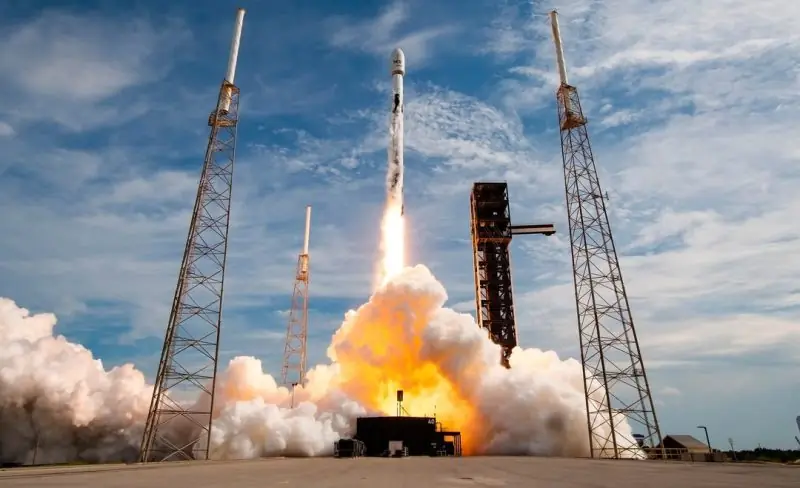
Space is pulling in more money than ever, even as the broader market stumbles. In Q2 2025 alone, space startups raised $7.8 billion. That brings the total since 2009 to a staggering $357.8 billion. Despite tech layoffs, shaky IPOs, and recession fears, investors are all in on space.
Why? Because space is all about defense, data, and next-gen infrastructure. And it is getting real returns. From satellite intel to orbital logistics, money is moving fast in every orbit.
The Defense Engine is Driving the Space Economy
Space funding is booming thanks to one main force: national security. The U.S. Golden Dome initiative is pouring $175 billion into space-based defense tech. France just bailed out Eutelsat with $1.8 billion to protect its satellite independence. Europe is done relying on outside suppliers.
Meanwhile, NATO members pledged 5% of their GDP to defense. That is sending demand for space-based geospatial intelligence (GEOINT) through the roof. Startups feeding military needs, especially with dual-use software, are cashing in.
86% of Q2’s $4.4 billion in application-layer funding went to defense-focused GEOINT firms. Anduril raised $2.5 billion. Helsing secured $683 million. Both are building software that turns orbital data into battlefield advantage.
Venture Capital is Back, and It is Bullish on Space
Venture capitalists didn’t back off in 2025. They leaned in hard. VCs made up 77% of all space funding this year, way up from 54% in 2024. That is a clear sign: The space economy is moving from speculative to strategic.
The U.S. led the charge, grabbing 70% of all Q2 space investment. Big deals included Impulse Space’s $300 million Series C and Applied Intuition’s $600 million Series F.
Plus, smart money is now chasing capital efficiency. Companies like SandboxAQ are drawing attention not just for what they do, but how well they manage cash.
However, not all the action is software. Infrastructure funding hit $3.2 billion in Q2, up 60% from the previous quarter. This covers rockets, satellites, launch systems, and everything that gets payloads into orbit.
But SpaceX’s grip is slipping. Starship is struggling. Test failures and delays are raising eyebrows. Meanwhile, smaller competitors are gaining speed, better tech, or both. It is still Elon’s game to lose, but the edge is dulling.
Right now, those areas only attract 3% of investments. But that number could explode once costs drop and risk falls.
Europe’s Space Problem is America’s Opportunity
Here is the quiet problem no one wants to say out loud: 80% of Europe’s space hardware is imported, mostly from the U.S., which is a huge vulnerability. If the U.S. ever tightens exports or shifts policy, Europe could be grounded.
That is why European nations are scrambling to build local capacity. France is leading, but others are catching up. They are doing it because war in Ukraine, tension in Taiwan, and growing cyber threats make space control a must-have, not a nice-to-have.
This dependency gap also benefits U.S. firms. Companies with strong manufacturing and secure supply chains are landing multi-year contracts with allies.
Q2 saw 20 exits worth $1.8 billion. That includes Voyager Technologies’ IPO, which popped 82% on debut, and Firefly Aerospace, now headed to Nasdaq. The M&A pace is on track to beat 2024’s record.
But there is a catch. Acquirers aren’t throwing money at high-growth hype anymore. They want discipline and profits. Space firms that survive the next wave will be the ones with real customers, tight operations, and clear margins.