
 Home >
 When the Taliban returned to power in Afghanistan in 2021, many feared women’s rights would shrink fast. Those fears are now written into law. The group has formally enacted a 90-page penal code that allows husbands to physically punish their wives and children, as long as the abuse does not result in broken bones or open wounds.
The code, signed by the Taliban’s supreme leader Hibatullah Akhundzada, has been sent to courts across the country. It turns long-standing restrictions into formal legal rules. Plus, it also makes clear that the state now sees certain forms of domestic violence as acceptable discipline.
Violence is Allowed, as Long as It Stays “Invisible”

The Economist / Under the new provisions, a husband can hit his wife or child without facing serious consequences, as long as the force does not cross what the law calls “obscene” levels.
The wording focuses on visible injuries like fractures or open wounds. If those are not present, the abuse may not even qualify as a crime.
Even when injuries are visible, the punishment is light. The maximum sentence for an abuser is just 15 days in prison. That short jail term sends a message that violence inside the home is a minor issue in the eyes of the state.
Legal analysts have noted something chilling. Afghan law often punishes harm to animals more severely than harm to women under this new framework. That comparison shows how little value the system places on a woman’s physical safety.
The code does not mention emotional abuse or sexual violence within marriage. Those forms of harm are left in a gray zone, effectively ignored. For many women, that silence speaks louder than any written clause.
Justice That Cannot Be Reached
On paper, a woman can still file a complaint. In practice, the hurdles are massive. To secure a conviction, she must prove her injuries before a judge using physical evidence.
That requirement sounds simple until you look closer. Many injuries from domestic violence do not leave clear marks. Bruises can fade quickly, and pain does not always show on the skin.
The court process adds another barrier. Women must appear fully covered and be accompanied by a male guardian, often their husband. If the husband is the alleged abuser, the victim is forced to show up with the person she is accusing.
This rule makes reporting abuse almost impossible. Few women would feel safe traveling to court beside a violent spouse. The law’s design discourages complaints before they even begin. The code also punishes women who try to escape. A married woman who leaves her husband’s home without permission, even to flee violence, can face up to three months in prison. Seeking refuge with relatives does not protect her from that risk.
A Broader Rollback of Women’s Rights
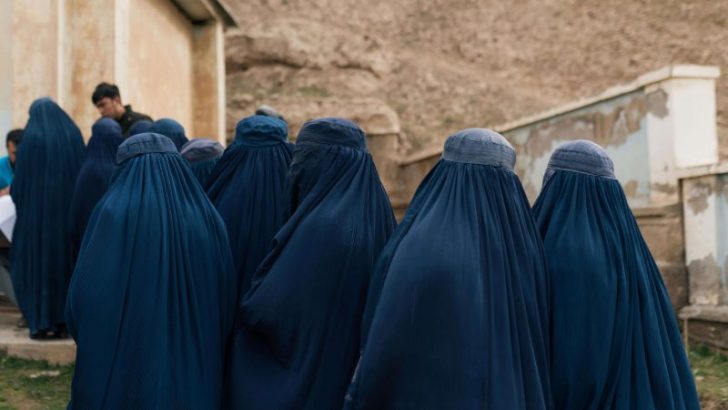
The News / This penal code follows years of tightening restrictions on women and girls since the Taliban takeover.
Girls remain barred from secondary schools and universities. Many women cannot work in government offices or with non-government organizations. Travel often requires a male guardian, and strict dress codes mandate full face coverings in public.
The new law also abolishes the 2009 Elimination of Violence Against Women law, which had offered some legal protection under the previous government. That earlier law criminalized forced marriage, child marriage, and various forms of abuse. Its removal erases one of the few formal shields women had.
The penal code introduces a rigid four-tier social hierarchy. Afghan society is divided into religious scholars, elites, the middle class, and the lower class. Punishments for the same crime vary based on social status rather than the severity of the act.
Religious scholars may receive only advice or a warning. Elite members can face counseling or a court summons. Middle-class individuals risk imprisonment, while those from the lower class may face both prison and corporal punishment carried out by religious authorities.