
 Home >
 Applied Optoelectronics has become one of the biggest AI winners on Wall Street. The stock has climbed about 187% this year, and earlier gains pushed it more than 246% higher at one point in 2026. That kind of rally naturally grabs investors' attention.
The excitement centers on artificial intelligence. As technology companies race to build larger AI data centers, demand for faster networking equipment has exploded. Applied Optoelectronics sits right in the middle of that trend, supplying high-speed optical transceivers that keep massive AI systems connected.
Still, a soaring stock price brings an obvious question. Has the company earned its premium valuation, or has investor enthusiasm gotten ahead of the business? The answer depends on how well Applied Optoelectronics executes its ambitious expansion plans over the next two years.
AI Demand Is Fueling the Growth

Kindel / Pexels / The company's biggest strength comes from its position in AI infrastructure.
Modern AI data centers need enormous amounts of bandwidth to move information between servers, graphics processors, and networking switches. Optical transceivers make those connections possible.
Demand has shifted rapidly toward advanced 800G and 1.6T optical products. These next-generation components move huge amounts of data while keeping power consumption under control. Every major hyperscale data center operator wants more of them as AI workloads continue to expand.
Management believes this demand is only beginning. The company has invested heavily in new production facilities to meet future orders. Its Pearland, Texas campus is adding nearly 400,000 square feet of manufacturing space, giving Applied Optoelectronics far more room to increase output.
Production targets are equally ambitious. Management expects monthly capacity to exceed 650,000 units of 800G and 1.6T transceivers by the end of 2026. That figure could rise above 930,000 units per month by the end of 2027 if expansion plans stay on schedule.
Manufacturing Advantage Could Set the Company Apart
Applied Optoelectronics offers more than just growing production capacity. It also controls an important part of its own supply chain by manufacturing indium phosphide lasers in-house.
Those lasers are essential components inside advanced optical transceivers. Industry-wide shortages have created supply bottlenecks, making reliable access to laser production increasingly valuable. Many competitors still depend on outside suppliers for those parts.
Vertical integration gives Applied Optoelectronics greater flexibility. The company can better manage production schedules while reducing dependence on third-party manufacturers. That advantage becomes even more important as customers seek long-term supply agreements.
Large cloud providers care about consistency as much as speed. They want suppliers capable of delivering hundreds of thousands of components every month without major interruptions. Owning critical manufacturing processes makes that goal easier to achieve.
Management expects second-quarter 2026 revenue between $180 million and $198 million. That range represents substantial year-over-year growth as AI-related sales continue expanding.
Analysts also expect much larger revenue in the years ahead. Consensus forecasts suggest annual revenue could approach $2.57 billion during 2027 if production targets and customer demand remain on track. Those expectations explain why investors have rewarded the stock with such a rich valuation.
The Risks Are Still Very Real
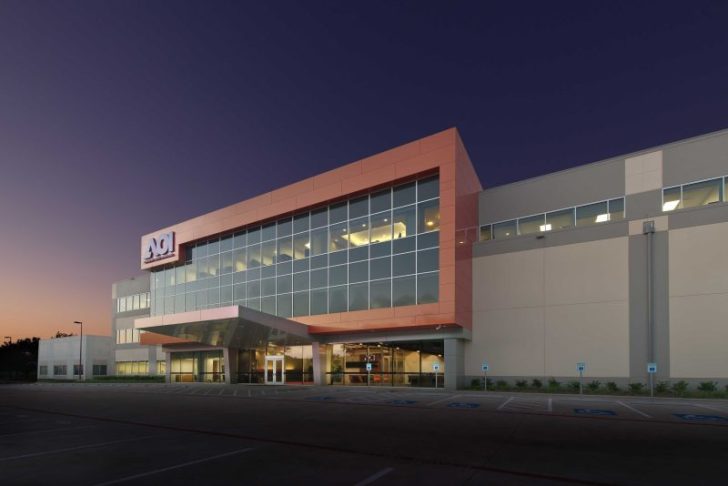
Seeking Alpha / Strong growth does not eliminate risk. Applied Optoelectronics still faces several challenges that investors cannot ignore.
The company recently reported first-quarter 2026 results that disappointed Wall Street. Earnings per share missed analyst expectations, and revenue also came in below forecasts. Those results reminded investors that rapid growth rarely follows a perfectly straight line.
Profitability also remains uncertain. Management's second-quarter outlook suggested results could range from a small loss to roughly breakeven. That leaves little room for operational mistakes while production ramps higher.
Execution may become the company's biggest test. Expanding manufacturing capacity is only one step. Every new product must pass customer qualification processes before large volume shipments can begin. Delays at any stage could slow revenue growth.