
 Home >
 Russia’s war economy has powered the country through years of conflict and sanctions. Military factories expanded. Government spending surged. Growth looked strong on paper. Now the cracks are showing. Moscow, Russia's richest city, has begun cutting investment plans. The decision sends a clear message that the financial strain of the war is no longer hiding in the background.
Russia’s economic engine still runs, but it is starting to cough and sputter. Falling energy revenues, rising borrowing costs, and drained reserves are forcing tough choices. Even the capital city, once insulated from economic pressure, is tightening its belt.
Moscow Turns to Spending Cuts
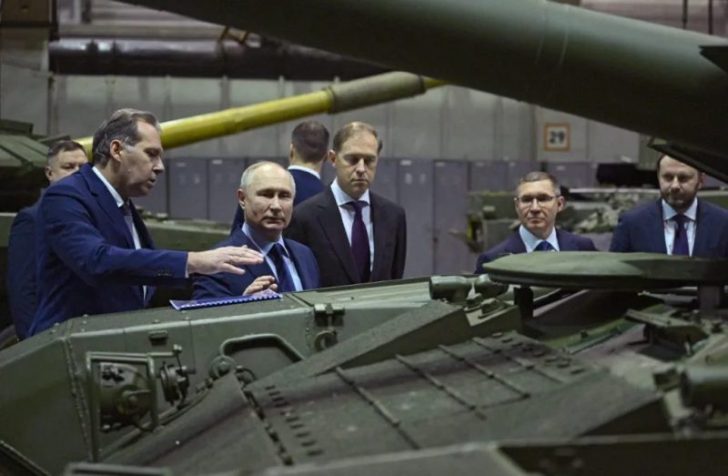
Foreign Policy / Moscow’s mayor, Sergei Sobyanin, recently confirmed a sharp reduction in the city’s investment program for 2026. Revenue growth during the first two months of the year reached only 2%.
City planners expected growth to hit 6.5%. The shortfall forced officials to rethink their spending plans.
The city will now trim its massive investment program by about ten percent. That means planned spending of 1.2 trillion rubles will shrink significantly. Officials also plan to cut about fifteen percent of the municipal workforce, a move that signals deeper concern inside Russia’s most powerful city government.
This decision stands out because Moscow rarely struggles with money. The capital hosts the headquarters of major corporations and collects a huge share of the country’s taxes. When the richest region starts cutting back, it suggests the financial pressure is spreading across the system.
The cuts also break a pattern that held for years. Moscow continued expanding projects even during the pandemic. Transport upgrades, housing programs, and urban redevelopment received generous funding. Now the city is scaling down, which tells investors that the economic outlook has changed.
Regional Budgets Feel the Pressure
Moscow’s problems reflect a much wider financial squeeze across Russia’s regions. Local governments face shrinking revenues, slower growth, and higher borrowing costs. The combined deficit of regional budgets surged in 2025, reaching roughly 1.48 trillion rubles.
The number of regions running budget deficits has climbed sharply. More than 70 regions reported losses last year. Analysts expect only a handful of Russia’s 89 regions to post a surplus in 2026. That imbalance creates a fragile financial structure across the country.
Many regional governments now rely on commercial loans instead of cheaper federal credit. Interest rates on those loans often exceed twenty percent. Such expensive borrowing eats into budgets that already struggle to cover basic services and infrastructure.
In the Nizhny Novgorod region, industry leaders warned officials about serious economic stress. Companies reported unpaid invoices exceeding 100 billion rubles. Some firms fear layoffs later in 2026 if the situation does not improve. The warning highlights the growing tension inside Russia’s industrial economy.
National Investment Begins to Stall
Viktor / Unsplash / For several years, state spending and import substitution kept Russia’s investment levels rising. That momentum is now fading.
National investment growth slowed dramatically in 2025. Deputy Prime Minister Alexander Novak admitted that investment rose only 0.5% during the first nine months of the year. Officials expect full-year growth to hover around zero.
Russia’s central bank has kept interest rates high to fight inflation. The policy protects the currency but makes borrowing expensive. Banks prefer financing projects already underway instead of supporting new ventures. As a result, many planned investments remain on hold.
Industries that depend on long-term capital are feeling the slowdown first. Transport projects, construction developments, and mining operations require large loans. When credit costs rise above twenty percent, companies hesitate to expand.
Even sectors that once enjoyed strong government support are losing momentum. The electronics industry saw investment fall after state subsidies shrank. The shift shows how dependent many industries became on direct government funding during the war economy boom.