
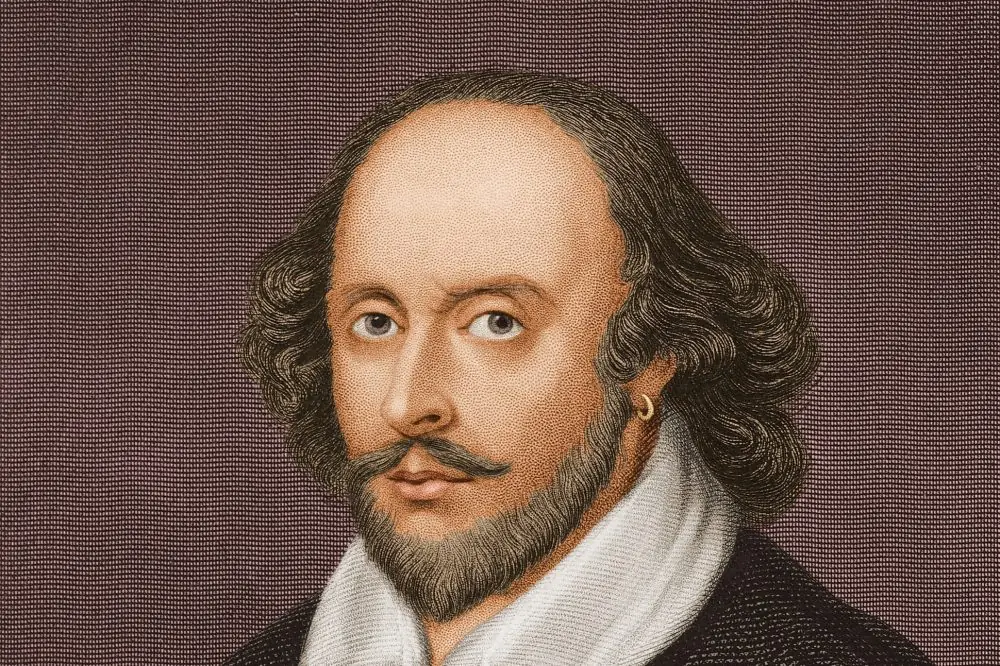
When most of us think of William Shakespeare, the first thing that comes to mind is his plays and sonnets. However, few people know that ‘The Bard’ was also responsible for creating or coining many words we still use today.
Let’s take a look at seven English words we owe to William Shakespeare:
7. Arch-villain
The word ‘arch-villain’ was used in the play “King John” (1596), referring to a villain with extreme maliciousness or wickedness. According to Merriam-Webster, an arch-villain is a leader or mastermind of evil forces and plots. The kind you would often find in some of Shakespeare’s plays, such as Iago in Othello and Edmund in King Lear.

6. Advertising
The word ‘advertising’ was first used by Shakespeare back in 1614 when he wrote the play “The Merry Wives of Windsor.” He wrote a scene with Falstaff saying: “Discourse is his advertising.”
It was not until much later that the word became widely used and associated with marketing. But it all started with Shakespeare.
5. Ballad-Monger
“Troilus and Cressida” (1602) is where we can find the term ‘ballad-monger’ being used for the first time ever. Ballad-mongers are people who sold or recited ballads in the streets. Shakespeare used this word to describe how Paris, one of the characters in the play, was described by Ulysses:

“He is a very superficial, ignorant, and rime-loving gentleman.”
4. Belongings
The word ‘belongings’ is first used in “The Merchant of Venice” (1598). In this play, belongings are referred to as objects that a person possesses or has at their disposal.
Likewise, it is also believed that Shakespeare used many other words derived from Old English and Middle English for the first time ever.
3. Beddazled
The word ‘bedazzled’ was first used in “The Tempest” (1611) to describe someone who is confused or bewildered. It has become a common colloquialism, often used even today to refer to someone who is easily taken advantage of.
2. Disturbed
The word ‘disturbed’ was first used by Shakespeare around 1590 in his play “Henry VI Part I.” This word was then widely adopted.

Today, it means something that has been affected emotionally and psychologically or disturbed from its usual condition.
1. Cold-blooded
The term ‘cold-blooded’ can be found in the tragedy “Macbeth” (1606). Here, cold-blooded refers to an individual with a lack of sympathy or emotions and is often used to describe someone who is cruel or remorseless. From arch-villain, advertising, ballad-monger, belongings, bedazzled, disturbed, to cold-blooded – it is clear that William Shakespeare has left a lasting mark on our language today.
He was not only one of the greatest writers of all time. But he was also an innovator creating many words that are still part of our modern English vocabulary. And all thanks to the 16th-century English playwright, we now have a wide variety of English words to choose from.