
 Home >
 Beijing didn't merely test a missile on July 6. It sent a clear and deliberate message to the United States. The launch of a long-range ballistic missile from a nuclear-powered submarine into the South Pacific was a strategic move, not a simple training drill. The intended audience wasn't just the neighboring countries that protested. Instead, it was the White House and the Pentagon.
China's Foreign Ministry described it as routine annual training and stated it complied with international law. But the timing and technology told a different story. The test happened hours after Australia signed a mutual defense treaty with Fiji, a move aimed at countering Chinese influence in the region. This was a direct, aggressive statement of military reach.
The launch was viewed by experts as a milestone. If anything, it reassured China's growing confidence in its sea-based nuclear deterrence.
How the JL-3 Missile Changes Everything
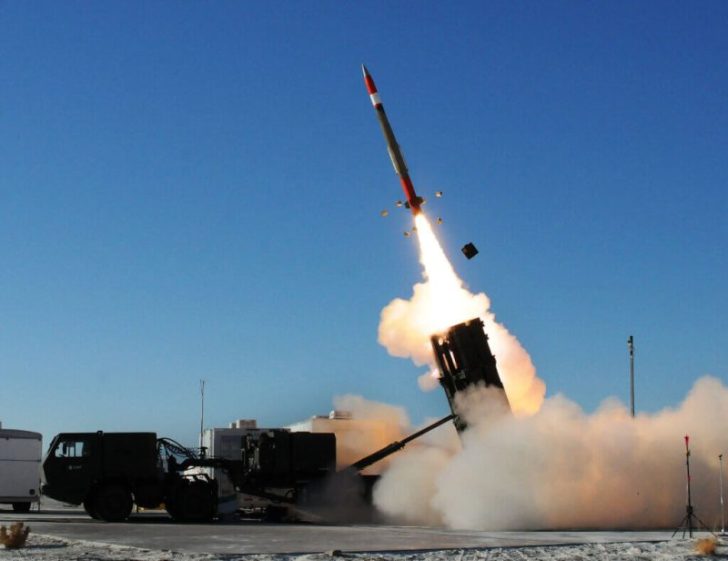
TWZ / The weapon in question is widely believed to be the JL-3 submarine-launched ballistic missile. Experts estimate its range to be between 10,000 and 12,000 kilometers.
This range is a game-changer. It means Chinese submarines, operating from the relative safety of the South China Sea or coastal waters, can now strike targets across the entire continental United States. This capability moves China significantly closer to a reliable nuclear triad, giving it a land, air-, and sea-based launch capability.
However, his development provides what military strategists call a credible "second-strike" capability. In other words, even if China's land-based missile silos were destroyed in a first strike, a hidden submarine could retaliate. This survivability makes the nuclear deterrent far more robust and has a profound impact on strategic calculations.
For decades, the United States has relied on its own naval power to dominate the Pacific. This test signals that China is building a force that can challenge that dominance from the depths of the ocean.
Regional Response and a Nuclear-Free Zone Controversy
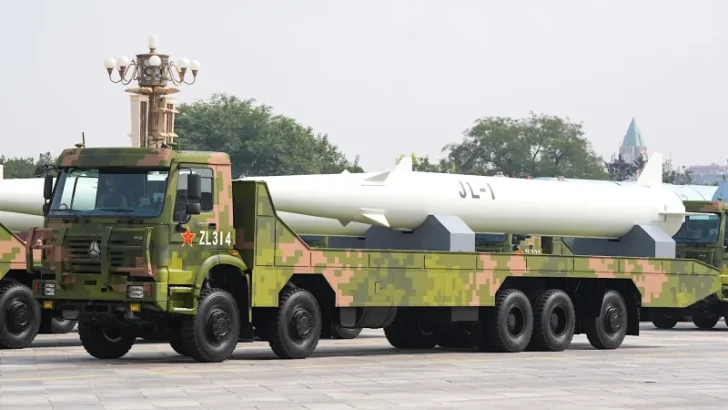
The Telegraph / The ballistic missile test-launch drew immediate criticism from the United States, Japan, Australia, New Zealand, and other parts of the world.
The U.S. State Department criticized Beijing's "rapid and opaque nuclear weapons buildup" and urged China to engage in arms control discussions. Australia’s Prime Minister called it a "provocative act" that destabilizes the region, and Japan voiced "serious concern". The test occurred just as NATO leaders were gathering, adding to the agenda of global security concerns.
A significant point of contention is the missile's landing zone. It was fired into the South Pacific Nuclear Free Zone, established by the Treaty of Rarotonga. China ratified the protocols of this treaty in 1987, promising not to test nuclear weapons in the area. The governments of New Zealand and the Solomon Islands were among those that noted this contradiction, highlighting the region's sensitivity to nuclear testing.
The short notice given to these nations - just hours before the launch - was seen as a ‘diplomatic snub.’ This is something that strained relations in the region.
With all that said, the U.S. and its allies are not taking the launch as an ordinary matter. As serious as it may sound, the coming days will reveal how the U.S. and the rest of the world react to the Chinese ‘diplomatic aggression.’