
 Home >
 Ukraine just crossed a quiet but serious milestone. For the first time, its military has officially approved a ground combat robot armed with automatic grenade launchers for front-line service. This is not a test toy or a lab project. It is cleared for real combat, under real fire.
The system is called the ‘Droid NW 40.’ It was built by the Ukrainian company DevDroid and certified by Ukraine’s Ministry of Defense.
View this post on Instagram
That approval means the robot meets NATO standards and can be fielded alongside regular units without special permission or workarounds.
This move signals something bigger than one new machine. Ukraine is pushing hard to replace risk with distance. If a robot can take the hit, a soldier does not have to.
The Robot is Built to Fight From the Front
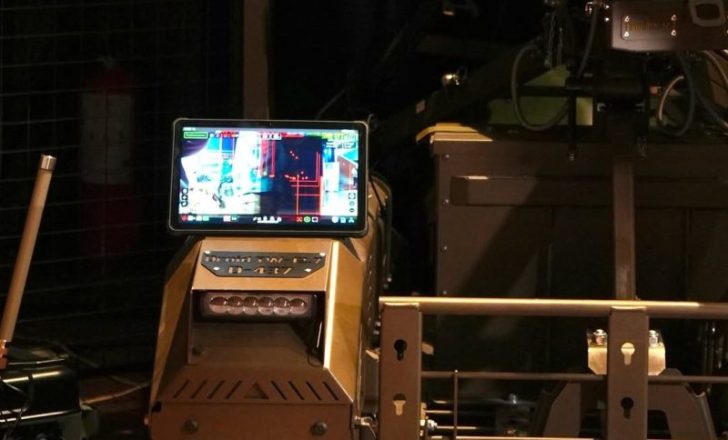
Dev Droid / IG / The Droid NW 40 is a tracked unmanned ground vehicle designed for direct combat. It rolls, stops, aims, and fires while its operator stays far away.
Its job is simple and brutal. Spot enemy positions, hit infantry, and threaten light armored vehicles. Do it all without exposing a human crew. The robot is fitted with the Wolly 40 combat module, which gives it serious punch for its size.
What makes this robot stand out is its weapon flexibility. It can carry the US-made Mk-19 40mm automatic grenade launcher or Ukraine’s own AGL-53. That matters because it lets units use existing ammo stocks without changing tactics or supply chains.
The firing range reaches about 1.5 kilometers. It carries 48 rounds on board. That is enough to suppress, disrupt, or break an enemy position before they know where the fire is coming from. Control is handled through secure channels. Operators can use Starlink, LTE, or other encrypted links.
If one signal drops, another can take over. This keeps the robot useful even in contested electronic environments.
On a single charge, the Droid NW 40 can travel up to 50 kilometers on roads or run for around 12 hours straight. That gives commanders flexibility. It can sit in overwatch or move with an assault group without constant recharging.
Why Ukraine Is Betting on Ground Robots?

Dev Droid / IG / Ukraine’s push toward robotic warfare is not about hype. It is about survival. Every meter closer to the enemy costs lives. Robots help stretch that distance.
Ground robots now handle tasks that used to fall on infantry. They fire weapons, carry supplies, evacuate wounded soldiers, and clear mines. Each mission done by a machine is one less risk for a human body.
Still, ground robots are not everywhere. Aerial drones dominate the fight. In November 2025, Ukrainian aerial drones flew more than 304,000 missions. Ground robots handled roughly 2,000. That is less than one percent of total drone activity.
This gap shows where the technology stands today. Flying drones are cheaper, faster, and easier to deploy. Ground robots face mud, rubble, trenches, and broken roads. Every obstacle slows them down.
Yet approval of the Droid NW 40 shows intent. Ukraine is laying legal and technical groundwork now so these systems can scale fast later. Once approved and codified, production and deployment become much easier.
This robot is not meant to replace soldiers. It is meant to take the first punch. In modern war, that first punch often decides everything.
Ukrainian engineers and military units are experimenting fast and learning faster. New systems appear, get tested under fire, then either improve or disappear.
Another example is the Burya remote grenade launcher developed by the Ukrainian company Frontline. This turret has been mounted on foreign platforms like the Estonian THeMIS and the German Combat Gereon. Live fire tests showed accurate hits beyond 1,100 meters.