 Home >
 Berkshire Hathaway just made one of its biggest technology bets much bigger. The investment giant sharply increased its Alphabet stake during the second quarter of 2026, even as Google's massive artificial intelligence spending pushed free cash flow below zero.
The timing makes the move especially interesting. Alphabet is producing record revenue and explosive cloud growth, but building enough computing power for the AI race is costing more cash than ever before. Berkshire appears comfortable looking past that short-term pressure.
Berkshire owned nearly 106 million Alphabet shares worth about $37.8 billion as of June 30, according to its latest portfolio disclosure. That made the Google parent Berkshire's third largest publicly traded stock holding, behind Apple at about $66 billion and American Express at roughly $51.3 billion.
That figure also clears up an important point around the latest filings. Berkshire's Alphabet position was about $37.8 billion, not $377.64 billion, and it held nearly 106 million shares rather than 1.06 billion shares. The smaller figures still represent a huge commitment.
Berkshire Makes Alphabet a Core Holding
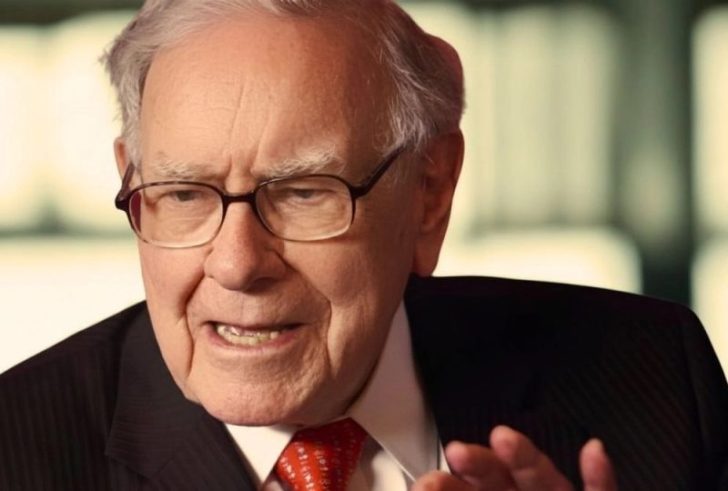
Eca / Berkshire increased its Alphabet investment by roughly 83% during the second quarter.
The buying helped push Alphabet ahead of Coca-Cola among Berkshire's largest stock positions and placed the technology company firmly among its core investments. It also came during a major change in Berkshire's wider investing activity. The company bought about $23.5 billion of stocks during the quarter while selling roughly $3.7 billion, ending a long stretch in which it had repeatedly been a net seller.
Alphabet played a central role in that change. Berkshire also participated with a $10 billion investment connected to Alphabet's effort to finance its growing AI infrastructure needs, according to Reuters.
Berkshire still has plenty of financial room after the purchases. Its cash holdings fell from a record $380.2 billion to $364.7 billion during the second quarter, leaving the company with one of the largest corporate cash piles in the world.
Alphabet's AI Bill Just Crushed Free Cash Flow
Alphabet generated $119.8 billion in second-quarter revenue, an increase of 24% from the previous year. Operating income climbed 30% to $40.8 billion, while the company's operating margin reached 34%. Google Services produced $94.5 billion in revenue, while Search and related advertising revenue increased 17% to $63.3 billion.
Google Cloud delivered the quarter's biggest growth number. Revenue jumped 82% to $24.8 billion as businesses spent heavily on Google's cloud platform, AI infrastructure and enterprise AI products. The cloud division also produced about $8.8 billion in operating income.
That spending reached $44.9 billion in capital expenditures during the second quarter. Alphabet generated $39.1 billion in operating cash flow, leaving free cash flow at negative $5.9 billion. The result marked Alphabet's first negative free cash flow quarter since becoming a public company.
About 60% of Alphabet's technical infrastructure spending during the quarter went toward servers. The remaining 40% went toward data centers and networking equipment, showing how broad the physical AI expansion has become. Management has no plans to slow down quickly. Alphabet raised its expected 2026 capital spending to between $195 billion and $205 billion, up from an earlier range of $180 billion to $190 billion.
Berkshire Bets the Spending Creates Something Bigger

Cotton Bro / Pexels / The clearest argument supporting Berkshire's investment sits inside Google Cloud. Revenue growth of 82% suggests customers are demanding far more computing power, AI services and cloud capacity than Alphabet could offer only a year earlier.
Alphabet's cloud backlog reached about $514 billion during the quarter. That huge contracted pipeline gives management a strong reason to keep building infrastructure, even when the immediate spending creates uncomfortable cash flow numbers. Alphabet is also using outside capital to support the expansion. During the second quarter, it raised $49.6 billion through stock and mandatory convertible preferred securities and another $20.3 billion through senior unsecured notes.
The financing push has continued beyond the quarter. Alphabet raised another $3.89 billion through its first Australian dollar bond sale in August as large technology companies increasingly turned toward debt markets to finance costly AI development.