
 Home >
 Ukraine has launched an aggressive new drone campaign aimed at one of the most important parts of modern warfare: logistics. Instead of focusing solely on frontline targets, Ukrainian forces are striking bridges, highways, fuel routes, and transport networks that keep Russian troops supplied.
Military analysts argue that armies run on logistics as much as weapons. Ukraine appears to be embracing that idea with a strategy designed to make Russian supply lines increasingly difficult to use. Recent reports suggest the campaign is already creating serious challenges for Russian forces operating in southern Ukraine and occupied Crimea.
The effort has been described by Ukrainian officials as a "logistics lockdown." The goal is straightforward. Make key transport routes unsafe, force delays, and reduce the steady flow of equipment, fuel, and supplies reaching frontline units.
While drones have been a defining feature of the conflict for years, this latest phase shows how rapidly the technology continues to evolve.
Bridges Have Become the New Battlefield
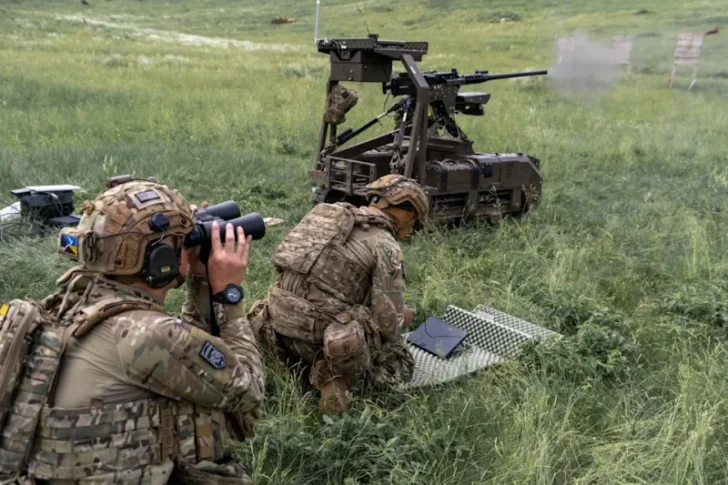
GTN / One of the primary targets of Ukraine's campaign has been a network of bridges connecting occupied Crimea with Russian-controlled areas in southern Ukraine.
Among the most significant targets is the Chonhar Bridge, a crucial section of the R 280 highway. Russian forces rely heavily on this route because it provides an important land corridor connecting Crimea with military positions farther north.
The route has become even more valuable as Russia seeks alternatives to the Kerch Bridge, which has repeatedly faced security concerns during the war. Any disruption to these backup routes can create significant logistical headaches.
In mid June 2026, Ukrainian drone operators carried out multiple attacks on bridges located around Chonhar, Armyansk, and Henichesk. Videos released by Ukrainian military units showed first-person view drones striking bridge surfaces directly.
Russian officials acknowledged damage to several crossings. Vladimir Saldo, the Kremlin-appointed governor of the Kherson region, confirmed that the Chonhar Bridge sustained serious damage and that traffic had been suspended.
Additional reports pointed to damage near Preobrazhenka, Myrno, and crossings linked to the Arabat Spit. Taken together, the strikes have increased pressure on one of the most important transportation networks in the region.
The campaign highlights a key military reality. Destroying a bridge can sometimes have a larger strategic impact than attacking a single combat position. When transport routes break down, supplies become harder to move, and military operations become more complicated.
A New Generation of Drones Changes the Fight
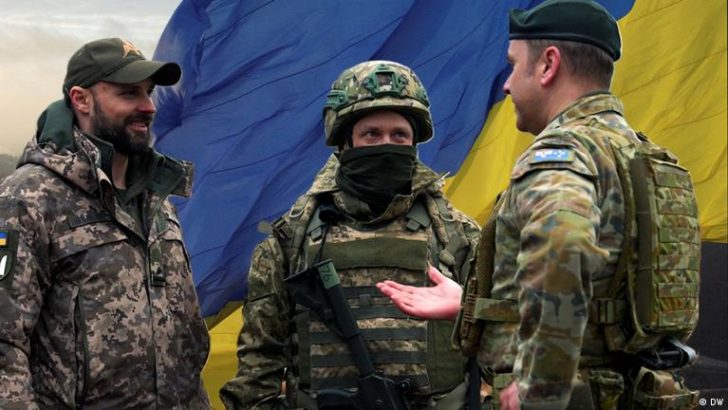
AJ News / The latest systems being used are designed to operate beyond the reach of typical battlefield quadcopters while remaining cheaper than long-range missile systems.
Among the reported platforms is the FirePoint FP 2 drone. With an 18-foot wingspan and the ability to carry a 220-pound explosive payload, it provides Ukrainian forces with a powerful tool for striking infrastructure targets.
Another system attracting attention is the Hippo drone. Reports indicate it can carry a 77-pound thermobaric warhead along with 88 pounds of additional explosives, making it particularly effective against hardened targets.
These drones occupy an important middle ground in the battlefield. They can strike locations between 20 and 200 kilometers behind the front line, allowing operators to target logistics hubs, roads, and transport corridors.
The campaign has also featured advanced American-made Hornet drones. These systems reportedly use artificial intelligence to identify targets and continue operating even in heavily jammed electronic environments.
That capability is especially important in modern warfare. Both sides invest heavily in electronic warfare systems designed to disrupt communications and navigation signals. Remember, autonomous drones reduce reliance on constant operator control. They can continue pursuing targets even when facing attempts to interfere with their systems.